Thursday, January 15, 2009

Sculpture in the Round


6th graders have learned about Mesopotamian relief sculptures. In Relief, one side is always flat and the other is raised up 3 dimentionally. In sculpture in the round, sculptures must be interesting from all sides. Most students think of things as looking at them from the front. It is a real challenge to make the back as interesting as the front.

Students are working on sculptures similar to that in Mesopotamia, working with good luck charms, on heroes or bravery and on warnings or narratives. After choosing one of the themes, they create a sculpture that uses horizontal lines (feels orderly, organized or soldierly) horizontal lines (peaceful and quiet) or diagonal lines (action) to help get their concepts to read to the viewers.

Of Teapots and Tea parties


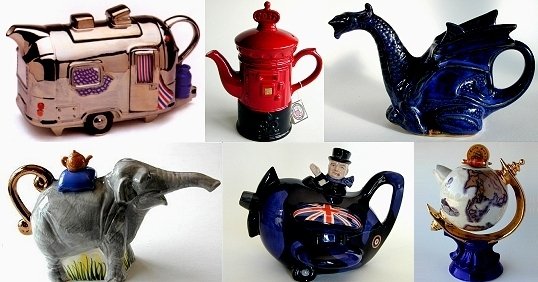
How else to end a clay class, but to combine all we have worked on and make a teapot?
Teapots can be made from coils, slabs or pinchpots. We learned how to make lids that stay on by constructing boxes. We learned how to make spouts by rolling out slabs. Students finished their classes by making teapots that combined all their skills into one form. This week we are having a tea party to end the semester with. Students will be able to drink from their teapots (those that are finished)or cups, and share a snack while we wrap up our ceramics to go home.

A quick reminder. Clay pots do not go on a stove. Instead, they are to hold hot water. They also get very hot in the mircrowave, so it is not recommended. However, they do pretty well in the dishwashers, and can be washed that way.
Good bye 8th graders. Have a great next semester

Tuesday, December 23, 2008

guest blogger: Grace

I like to sketch scenes from the Lord of the Rings, and from the movie Twilight, because I likke fantasy, and I enjoy challenging myself by attempting to recreate the aura of magic and mystery that surrounds many of these fictional characters. I also enjoy writing quotes from the books/movies that I think represent the scene best. I think that the hardest part of sketching is shading things in just the right way, to create shadow and depth.

Thursday, November 20, 2008

Ceramic Houses with Attitude


The ceramic classes are pooling all they have learned on working with slabs into making houses with attitude. They created templates or patterns for their houses, putting these paper houses together before creating their final piece. Some of their houses slant, some have curved windows and doors, some are shaped as fish or train cars. But all of them have a non-traditional way of looking at living spaces. Each house is decorated with incised designs and painted with underglazes for a detailed watercolor look, or traditional glazes for a bold glassy finish.

Thursday, October 16, 2008

Colors and photo mosaics


This site is great. It grabs images from their data base that matches the colors you pick. So you end up with an assortment of phots and illustrations that all match one color. Lots of fun. You've got to try this.
labs.ideeinc.com/multicolour

Art is more than just making Stuff.....


There is more to making Art than just making stuff.

Go to: http://www.ahsd25.k12.il.us/~TriciaFuglestad/VisualArt/page14/page15/page26/page26.html

to see how Tricia Fuglestand and her art classes talk about ARTICULATION!
The words to their song say it all:

"There's more to making art than just pleasing your eyes
here is the place whre we learn skills for our lives
stratagise, compromise, plan and visualize
integrate, concentrate, learn to relate
exposed to cultures and eras in history
we're trained to be thinkers with visual literacy
we fine tune our motor skills while growing in self-esteme
we follow directions and understand sequencing
in ART."

Friday, October 10, 2008

Composition


Composition is how you lay out the images you put on the paper. How do you design your art? Do you make your image big, or tiny? Do you put it in the middle of the page or going off the edge of the page? Do you make everything similar or emphasis one part or create variety throughout? Here are a few simple considerations when looking at composition.


Balance is the consideration of visual weight and importance. It is a way to compare the right and left side of a composition.

The brown butterfly above by itself is essentially symmetrical. Both sides are similar in visual weight and almost mirrored. Because symmetrical balance often looks more stiff and formal, sometimes it is called formal balance.

Asymmetrical balance is more interesting. The black butterfly above has sides that are similar in visual weight but not mirrored. It is more casual, dynamic, and relaxed feeling so it is often called informal balance.

Variety - You create variety when elements are changed. Repeating a similar shape but changing the size can give variety and unity at the same time. Keeping the same size, but changing the color can also give variety and unity at the same time. In visual composition, there are many ways you can change something while simultaneously keeping it the same.

Depth - Effects of depth and space projecting toward the viewer add interest. Linear perspective in the real world makes things look smaller in the distance. Some artists try to avoid depth by making large things duller and small things brighter, and so on, to make the objects contradict realism. Many artists don't believe in realism even though they could do it if they wanted to. It seems too boring to them. Realism wouldn't be art for some artists.

Repetition - Some ways to use Repetition of the Visual Elements are size variation, color saturation and overlapping.